The new studio
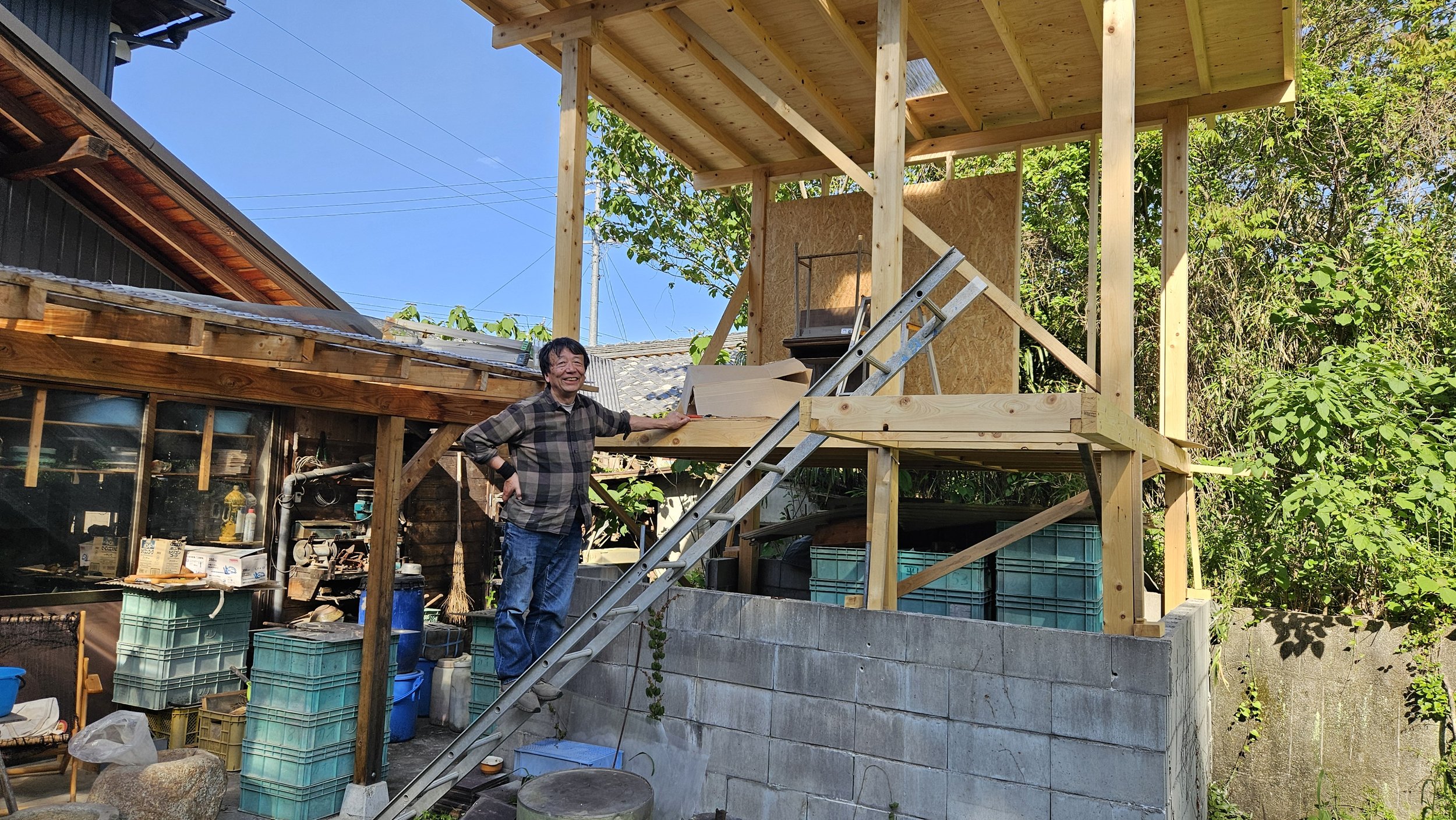
The new studio for students is almost finished; the ladder marks the spot where the staircase will be built.
I visited Shibata‑sensei in May 2026 to see the new student studio under construction. It was a wonderful spring day and the sun warmed everything. The air carried the pleasant, powdery scent of sawdust. Sensei spoke of his plans for the studio’s backyard — not merely a place for work, but a woven garden of movement and quiet: a space for cultural exchange, for communal practice, for rest.
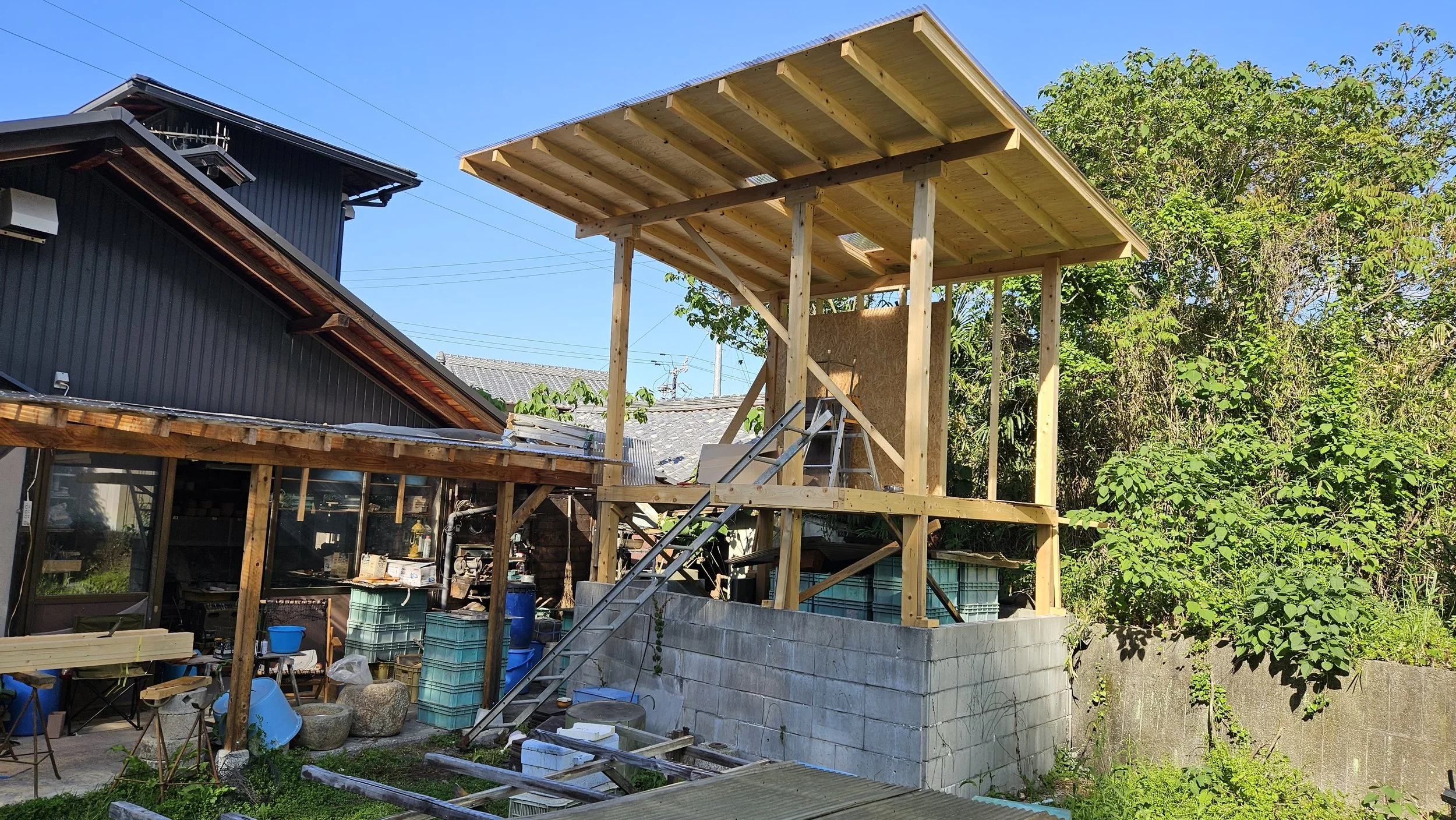
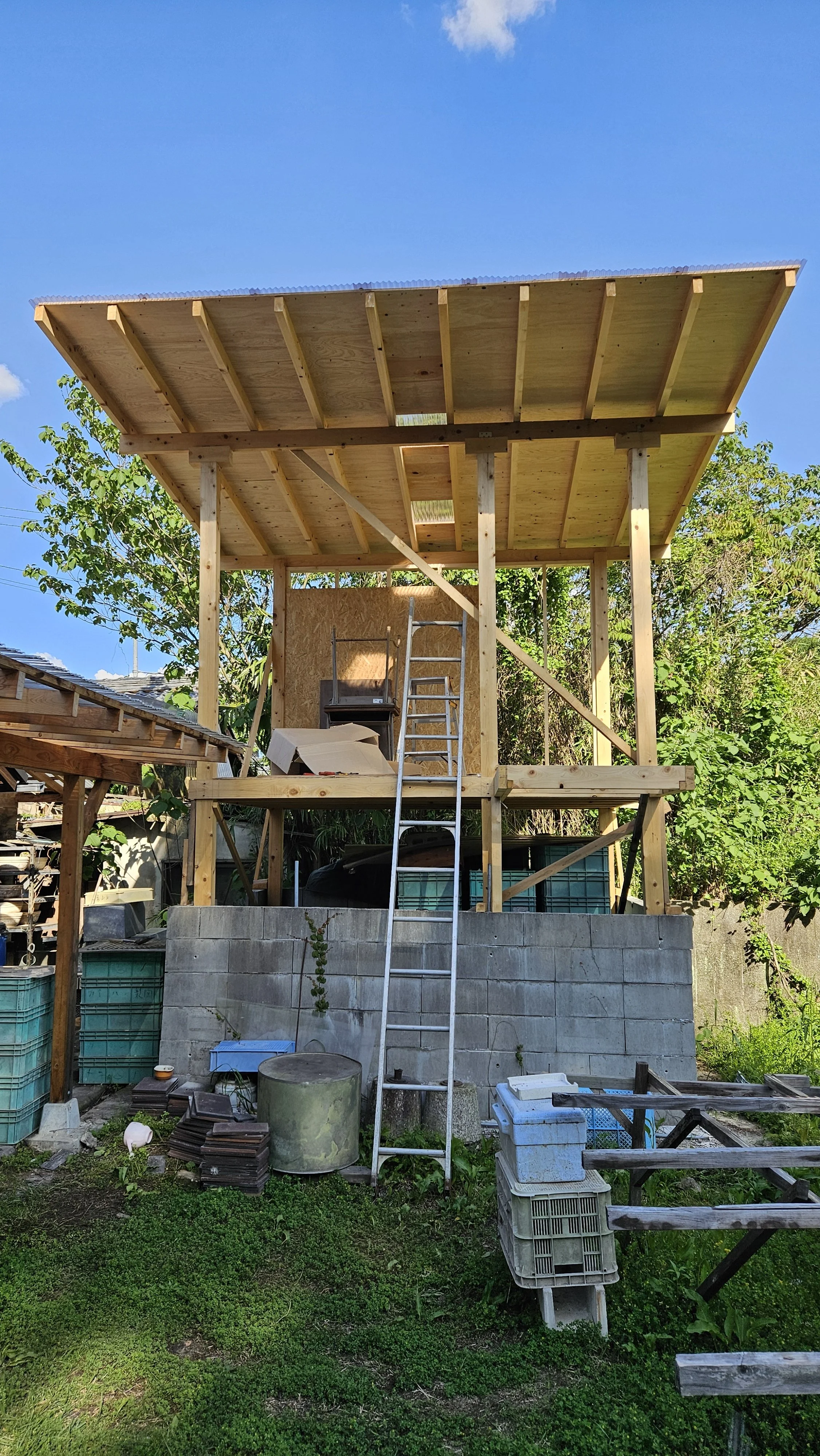
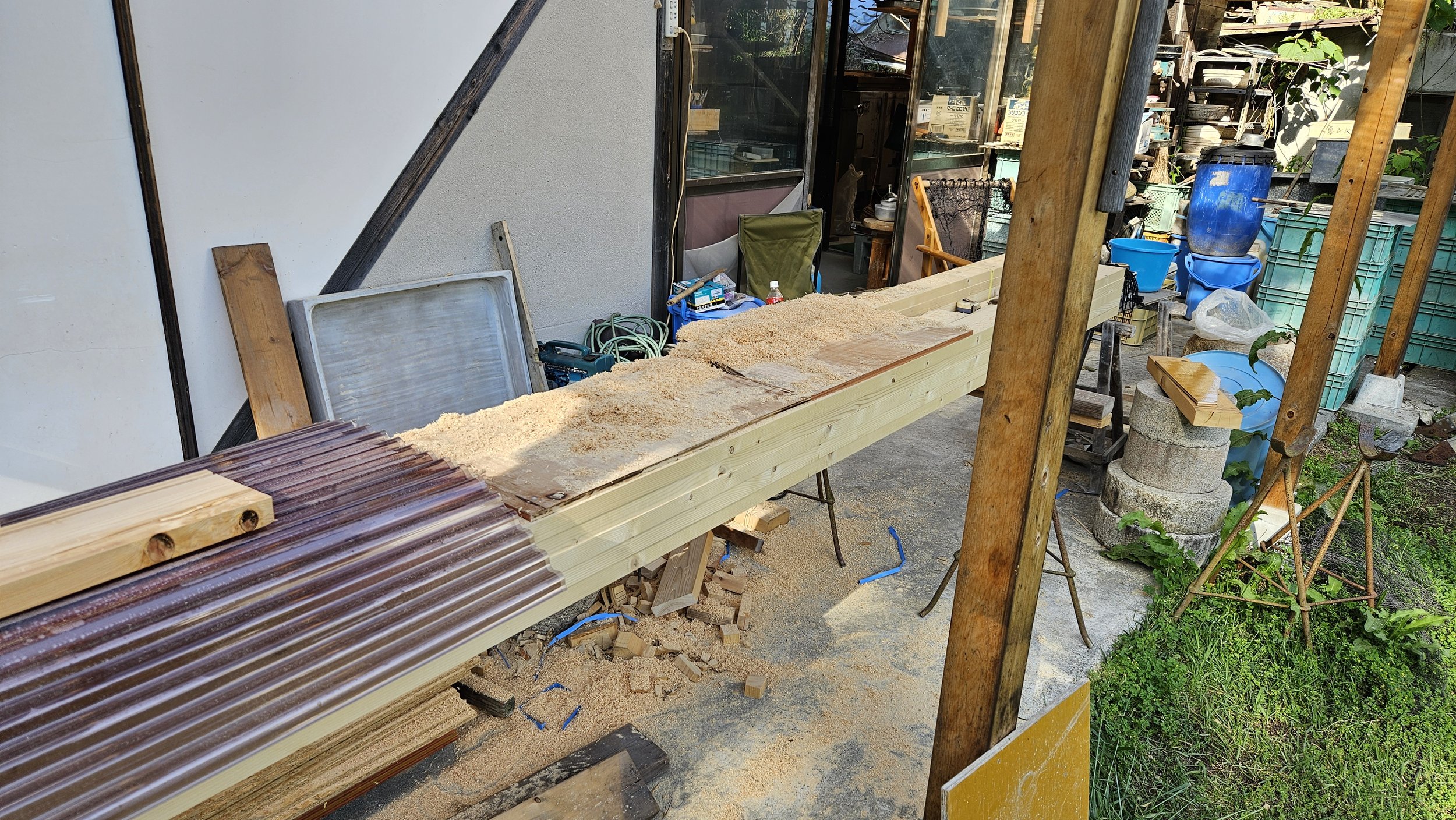
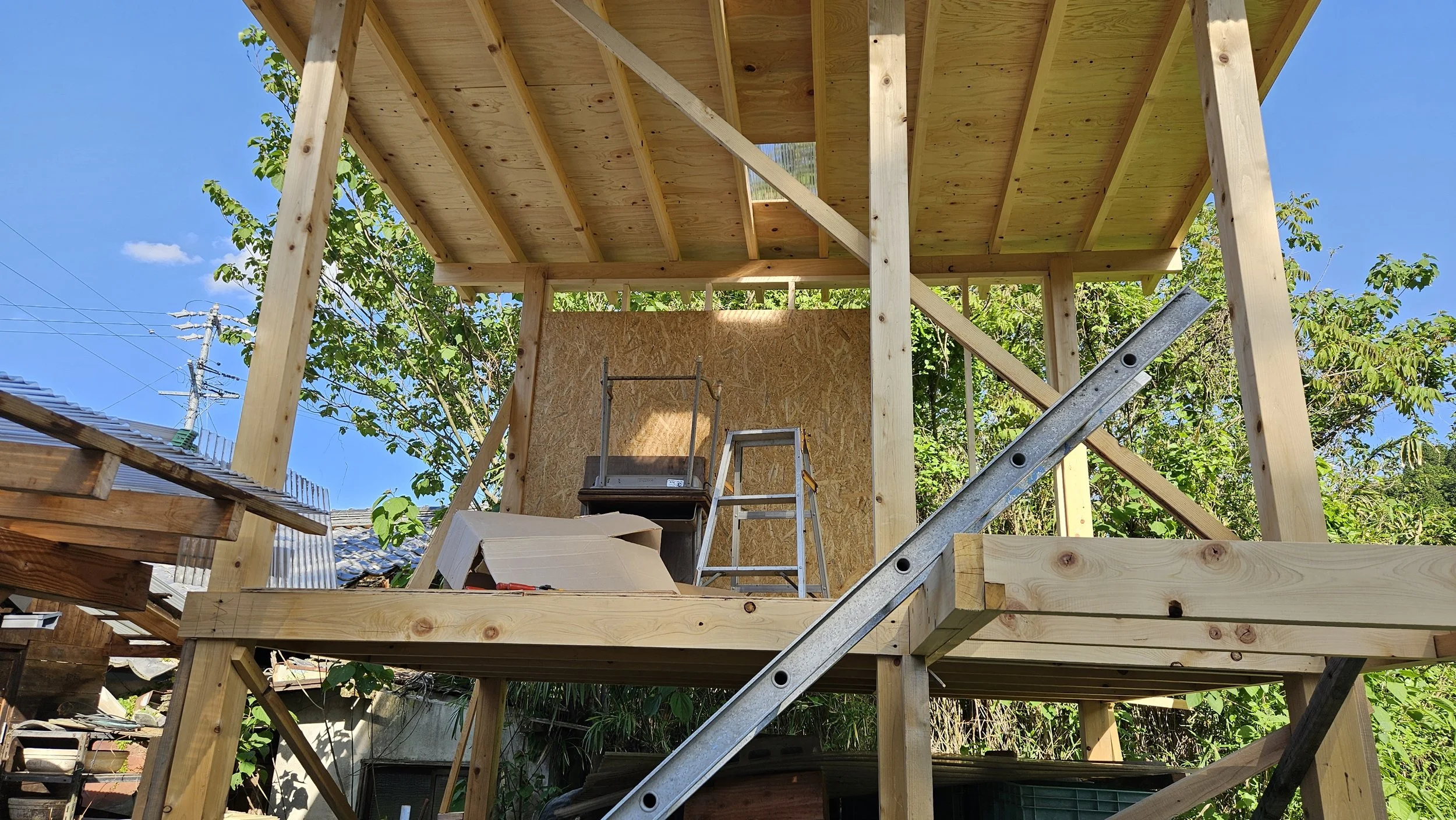
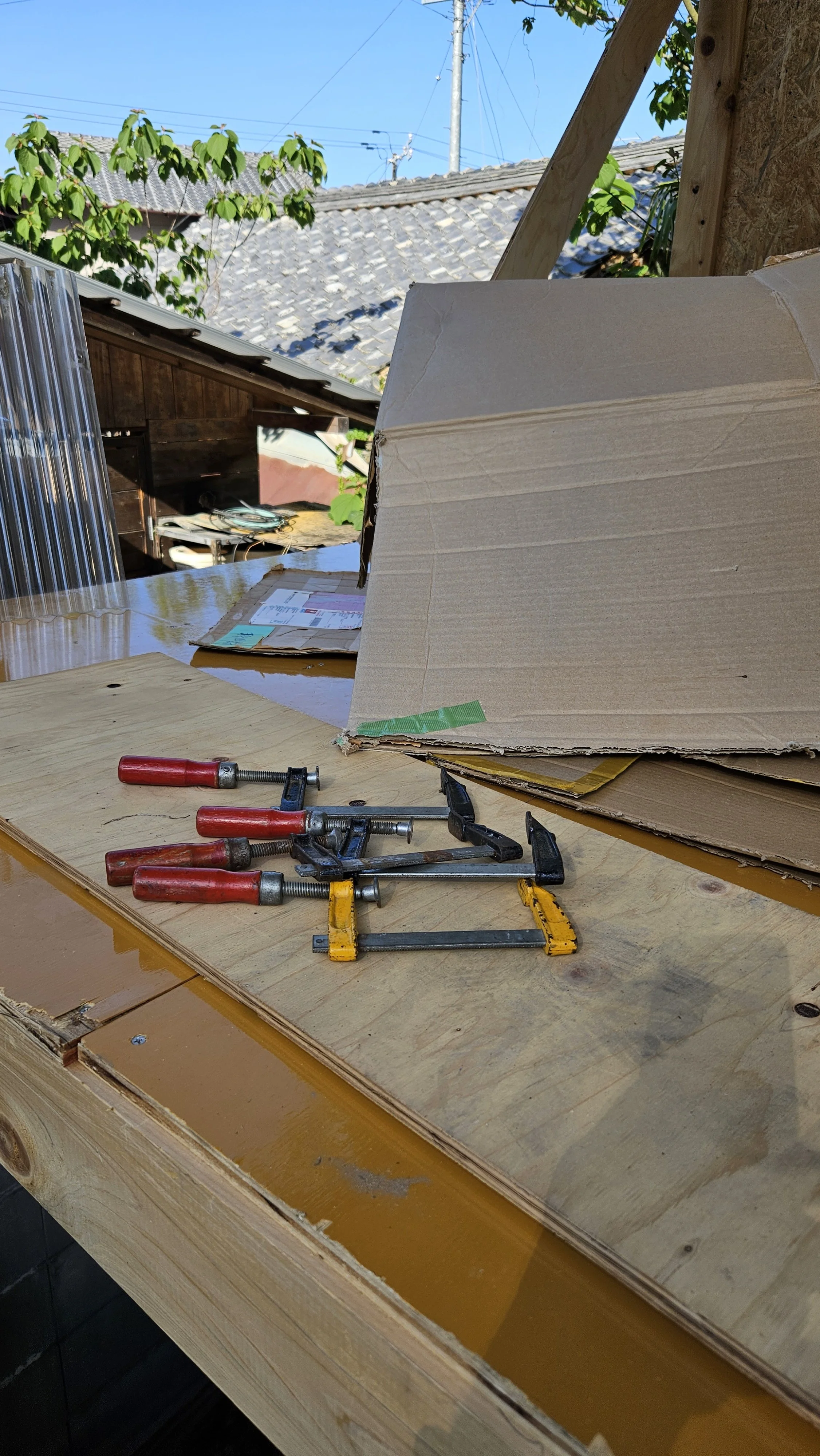
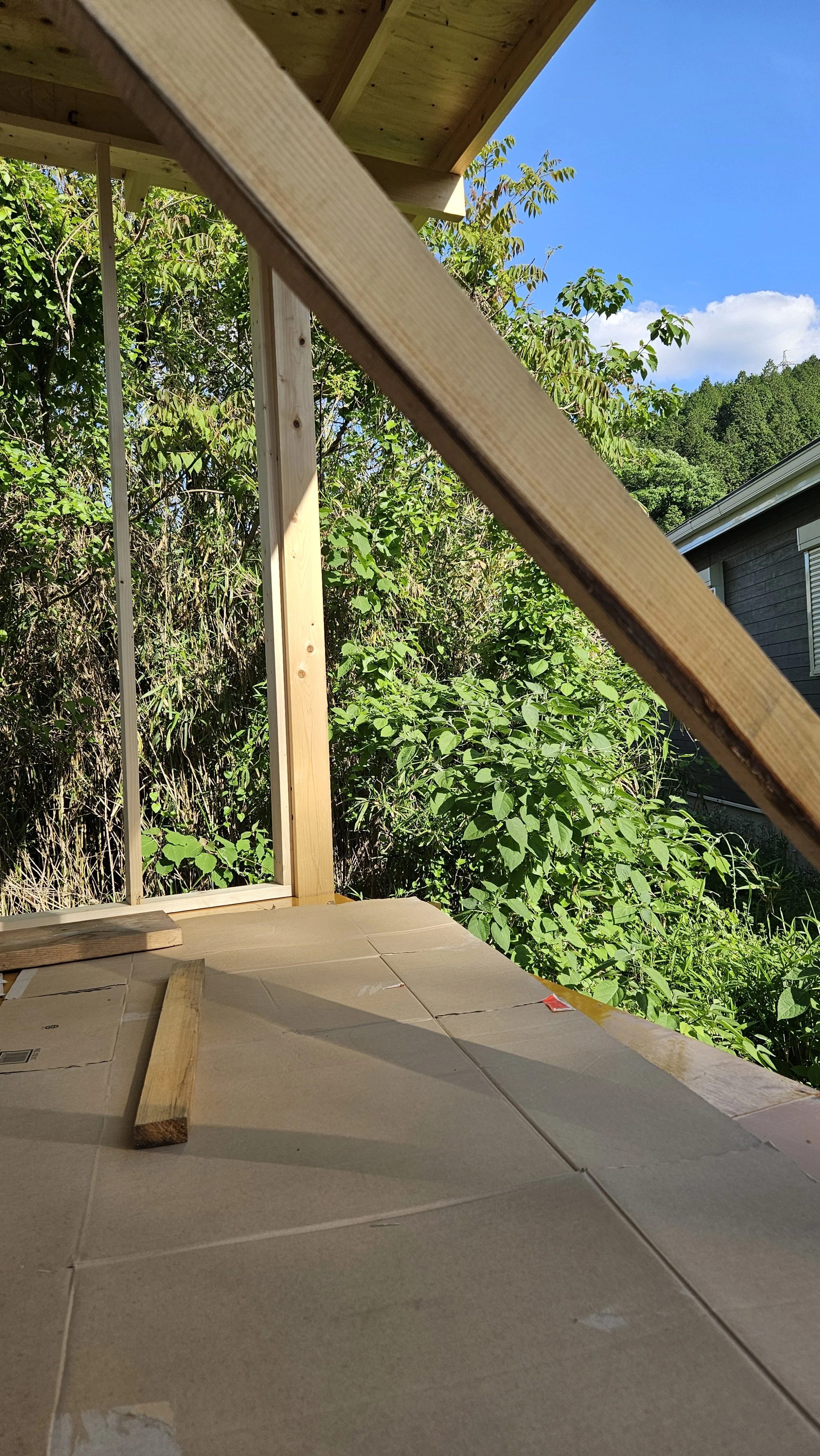
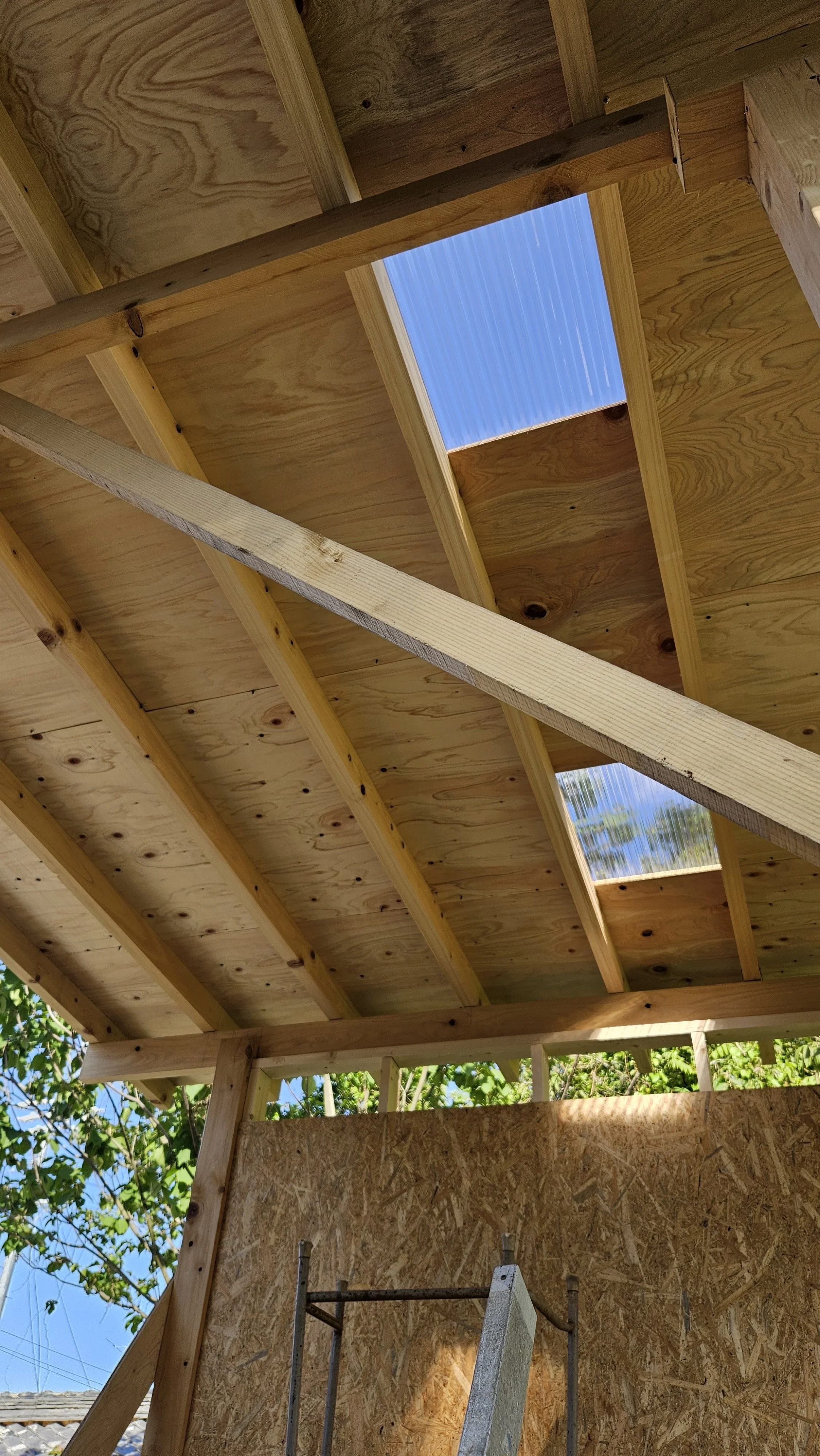
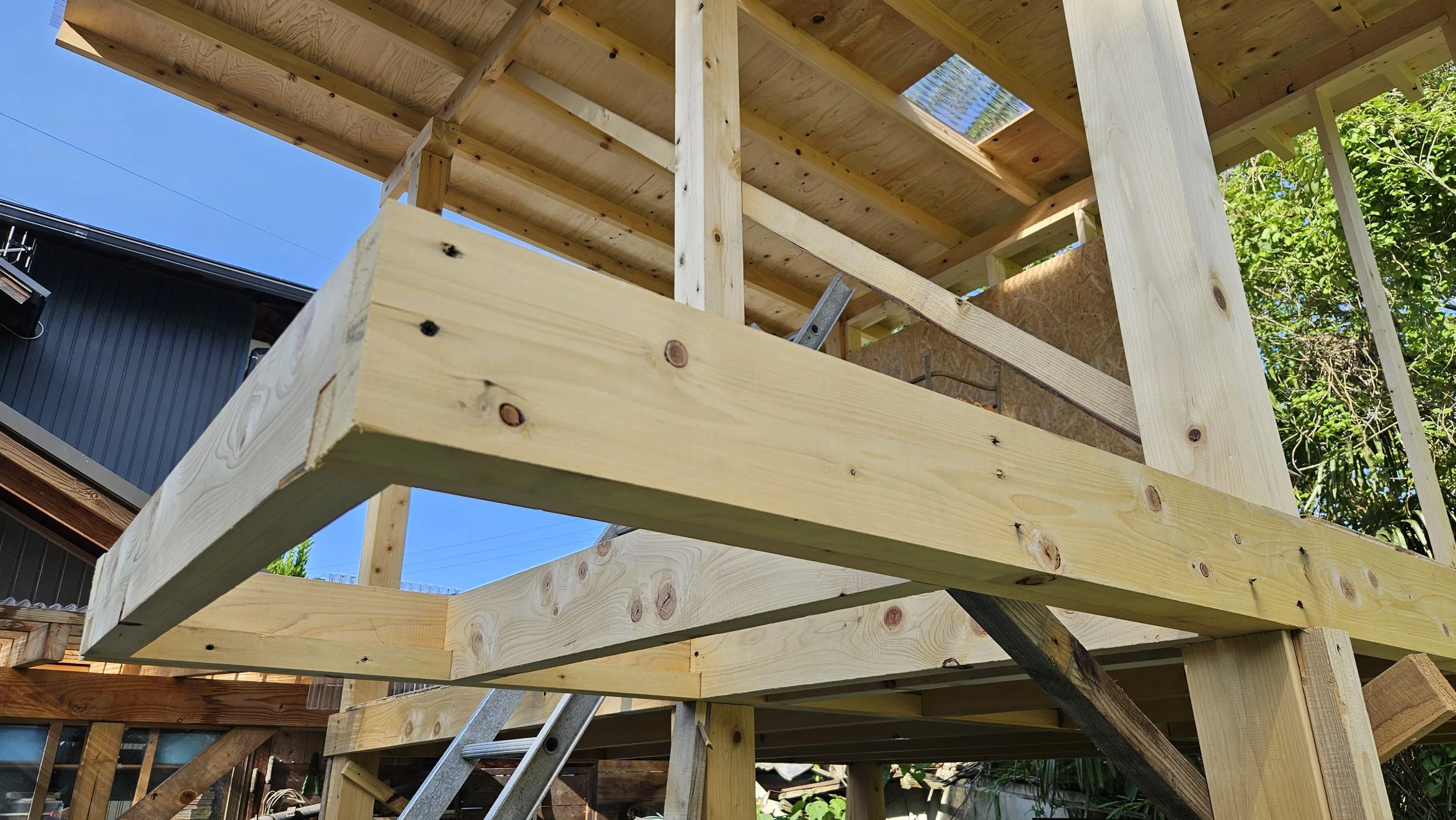
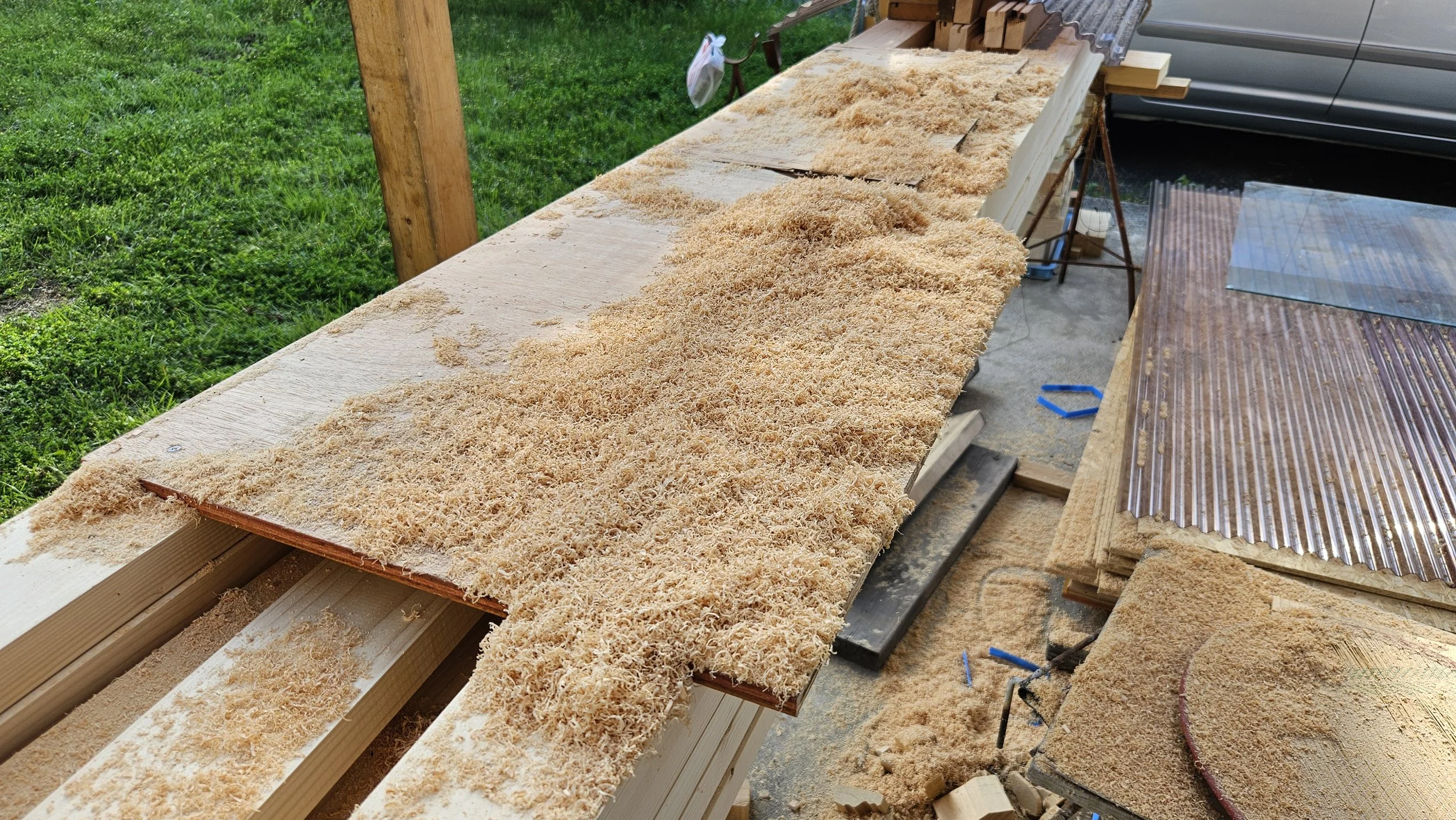
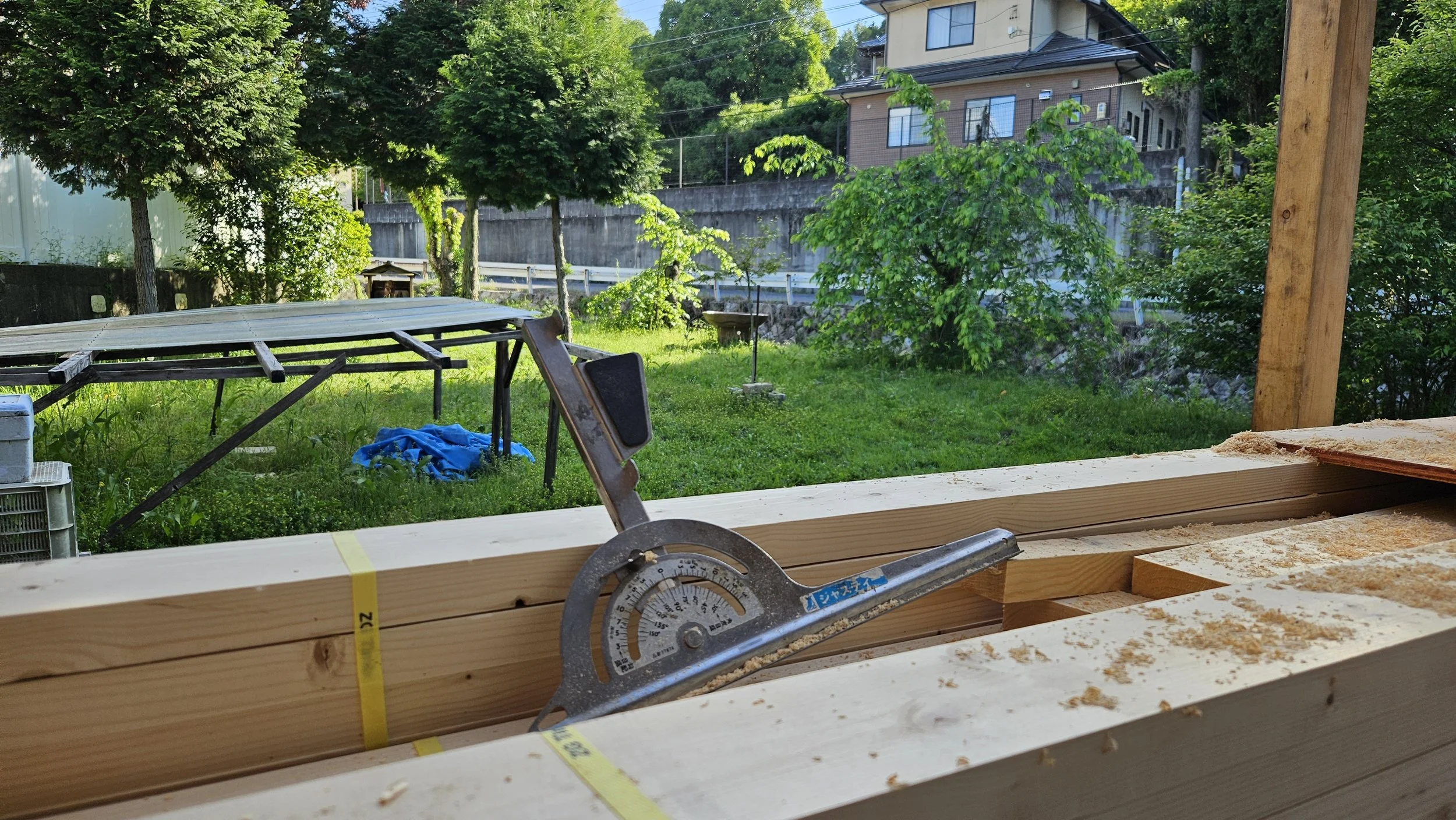
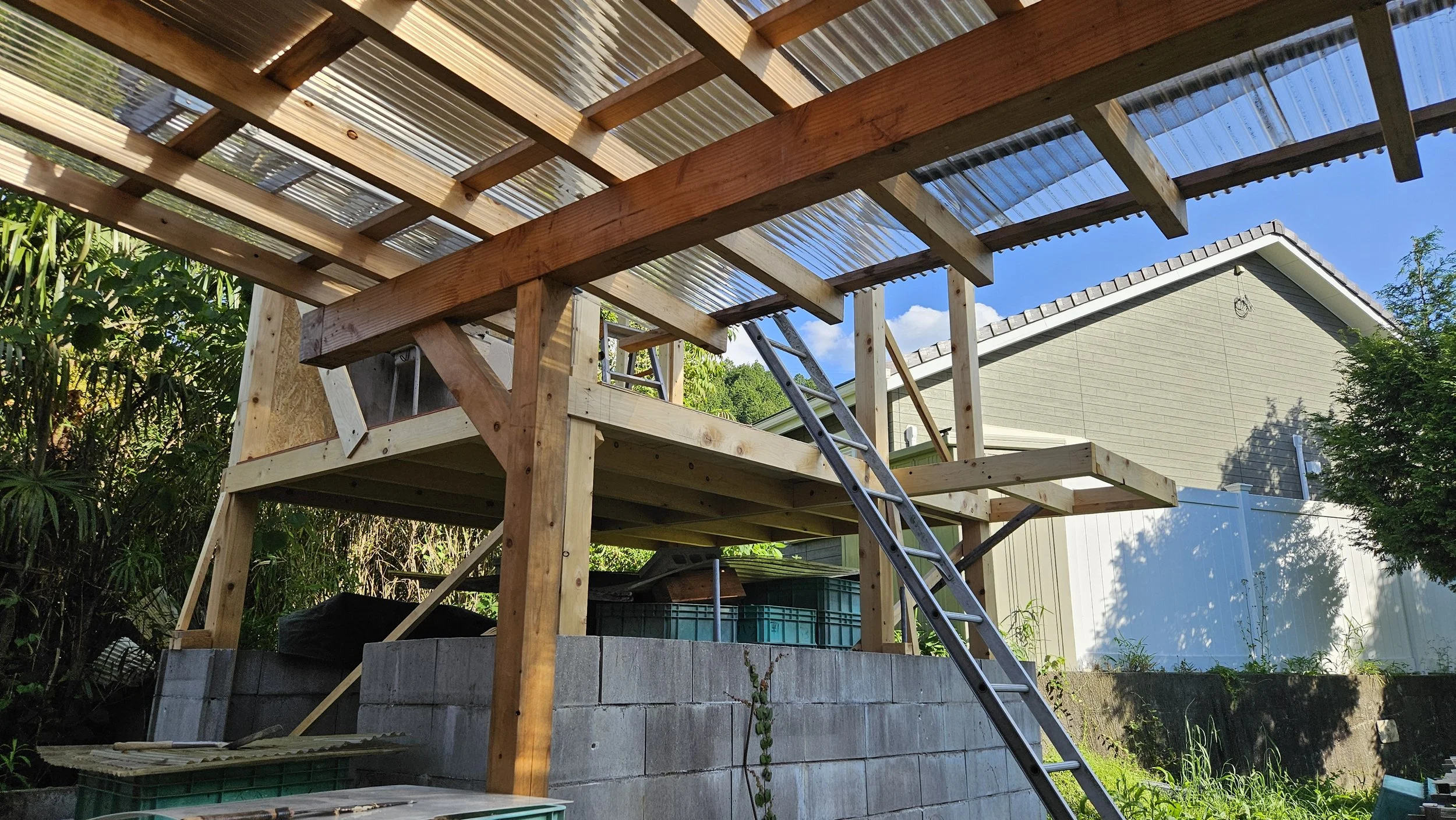
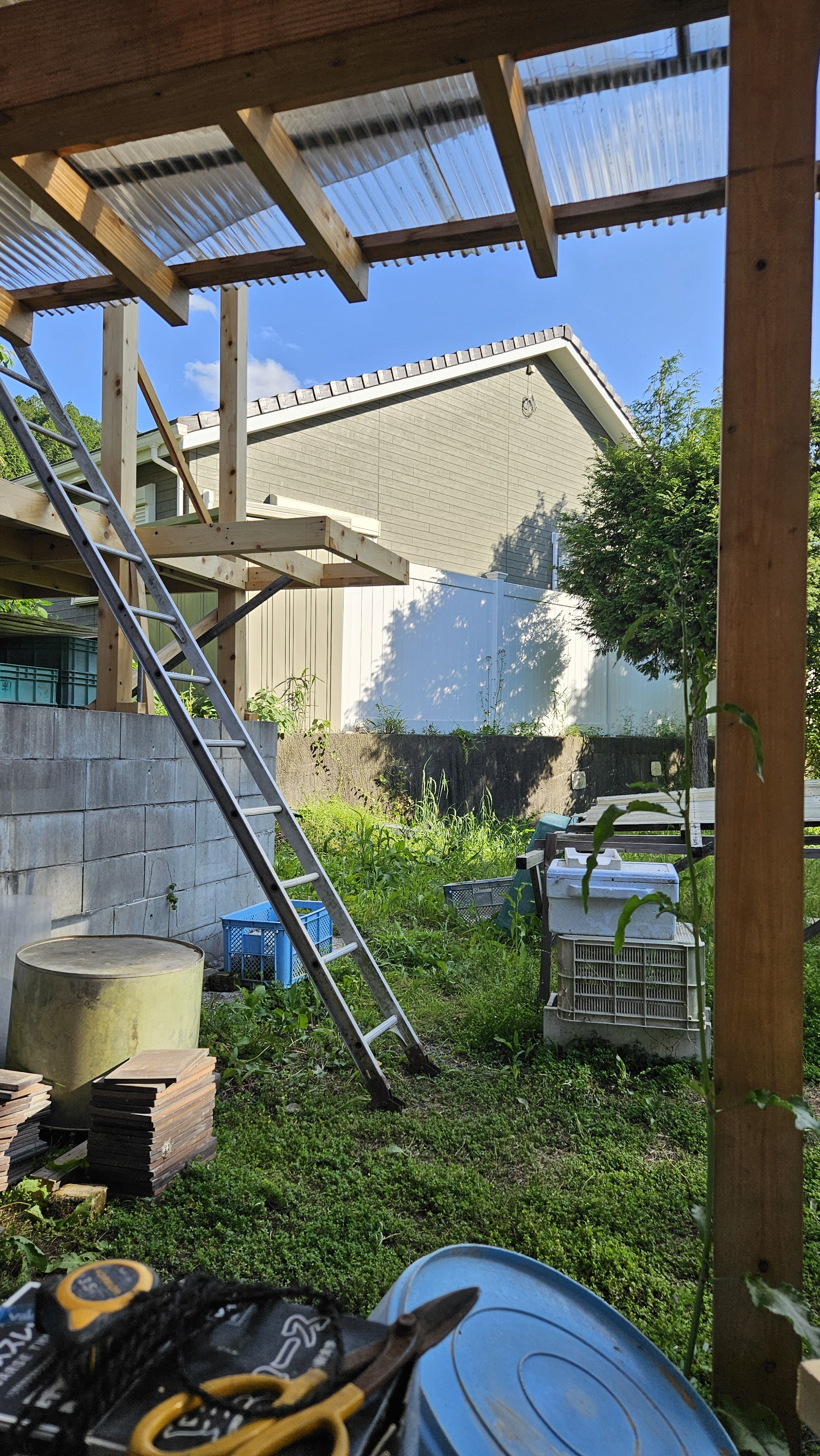
Sensei’s old friend – a carpenter, beekeeper, and do-everything fixer – has been busy fitting out the new studio. In the photos he still looks like he’s “at the helm,” but by the time you read this I expect it will be almost habitable, with only the walls and staircase left to finish. Like gently shaving the ragged edge from an old tea bowl, the roughness is being quietly smoothed away.
What Shibata-sensei makes is not simply a pottery school. His retreat is a place designed to give more than clay and wheel technique: it offers the whole heart of Japan country living, the scent of the seasons, the depth of everyday gestures. There are nights of bright laughter and impromptu music, charcoal barbecues, and there are also solemn, hushed tea gatherings. Both are like the two sides of the same plate; here they resonate with one another.

The studio building
The studio perches beside a murmuring creek; before it stands the main kiln, modestly to the left in the view. The building feels like a coffee-shop daydream married to a potter’s workshop – civilised warmth and clay-smeared earnestness sharing one small roof.
For sensei, the tea ceremony is not mere etiquette. It is the source from which pottery arises, a living embodiment of Zen and the wabi-sabi sensibility. The finger-marks in a tea bowl, the wavering of a glaze, the very imperfections are at the core of Japanese aesthetics. These hand-senses and ways of seeing cannot be learned by skimming a manual. They come, slowly, from touching clay and wind and people, from pausing at the moss in a wall’s corner or at a single bloom in the garden.
This small garden and the rooms around it are not an outside view of Japan but an entrance into Japan lived from the inside. As everyday life relaxes and the senses sharpen, the quiet truths of living settle into the hands. Learning here is never a museum exhibit; it becomes a living, breathing tradition. That bridge – from tradition as relic to tradition as lived practice — is exactly what Shibata’s retreat offers.